Cada reserva feita através de uma OTA custa-lhe normalmente entre 15% e 30% em comissões.
E esse valor acumula-se rapidamente. Para um hotel independente com uma tarifa média de 150€ por noite, isso representa entre 22€ e 45€ por quarto e por noite que vão diretamente para Booking.com, Expedia ou Airbnb, em vez de ficarem no seu negócio.
Além disso, segundo o relatório U.S. Online Travel Overview 2025 da Phocuswright, as OTAs já representam mais de 40% das reservas hoteleiras online nos Estados Unidos, o que significa que muitas propriedades independentes estão a pagar comissões sobre quase metade da sua receita.
É por isso que transferir mais reservas para o seu próprio website — onde não paga qualquer comissão — é uma das decisões com maior impacto na rentabilidade do seu alojamento. Mas isso não acontece por acaso. As reservas diretas exigem um motor de reservas robusto, um website que transmita confiança, preços que recompensem os hóspedes por reservarem diretamente e relações fortes com os clientes que os façam regressar sem depender de uma OTA como intermediária.
Neste guia, apresentamos nove estratégias práticas para aumentar as reservas diretas do seu hotel, B&B ou alojamento, cobrindo desde a configuração do website e a visibilidade nos motores de pesquisa até à comunicação com hóspedes e programas de fidelização.
Porque é que as reservas diretas são importantes para hotéis independentes
O benefício financeiro das reservas diretas é simples: eliminam a comissão paga a uma OTA em cada reserva. Por exemplo, se a sua propriedade atingir 60% de ocupação em 15 quartos com uma tarifa média de 140€ por noite, poderá poupar aproximadamente entre 27.000€ e 45.000€ por ano ao transferir apenas metade das reservas OTA para canais diretos. É margem que entra diretamente nos seus resultados — ou que pode ser reinvestida na experiência do hóspede, na equipa ou em marketing para gerar ainda mais reservas.
Para além da poupança em comissões, as reservas diretas oferecem algo que as OTAs limitam deliberadamente: os dados dos hóspedes. Quando alguém reserva através da Booking.com ou Airbnb, a OTA controla essa relação. Recebe apenas um endereço de email mascarado e informações limitadas sobre o hóspede. Quando a reserva é feita através do seu website, obtém o email real, preferências de reserva e histórico de estadias — dados que pode utilizar para enviar ofertas personalizadas, incentivar reservas repetidas e criar uma relação direta com os hóspedes fora das plataformas OTA.
As reservas diretas também lhe dão controlo sobre a experiência do hóspede desde o primeiro contacto. É você quem define a política de cancelamento, as condições de pagamento, as mensagens de confirmação e a comunicação antes da chegada. Esse controlo influencia diretamente a forma como os hóspedes percecionam o seu alojamento antes mesmo de chegarem.
Como aumentar as reservas diretas: 9 estratégias que funcionam
Cada uma destas estratégias aborda uma parte específica do desafio das reservas diretas. Algumas são elementos fundamentais que precisam de estar implementados antes de qualquer outra ação funcionar. Outras desenvolvem-se sobre essa base para melhorar os resultados ao longo do tempo.
1. Crie um website pensado para converter visitantes em hóspedes
O seu website é o ativo mais importante para gerar reservas diretas. Quando alguém visita o seu website oficial depois de encontrar o seu hotel numa OTA — um comportamento adotado por 52% dos viajantes, segundo um estudo da Google — esse website precisa de carregar rapidamente, parecer profissional e tornar o processo de reserva simples e intuitivo. Pelo contrário, um website lento, desatualizado ou confuso faz com que o visitante regresse imediatamente à OTA.
Um website moderno, responsive e otimizado para dispositivos móveis, com fotografias profissionais, descrições claras dos quartos, preços transparentes e um botão “Reservar agora” em destaque em todas as páginas, pode transformar um visitante num hóspede sem comissões.
Elementos essenciais para aumentar as reservas diretas através do seu website:
- Design responsive para dispositivos móveis: mais de um terço das vendas de viagens acontece através do telemóvel. Um website que não funcione corretamente em mobile perde reservas imediatamente.
- Fotografias profissionais em alta resolução que mostrem quartos individuais, áreas comuns, toda a propriedade e os arredores.
- Informação clara e atualizada sobre preços e disponibilidade para comparação com OTAs.
- Um botão “Reservar agora” visível acima da dobra em todas as páginas.
- Tempos de carregamento rápidos: cada segundo extra aumenta a taxa de abandono.
- Elementos de confiança, como avaliações de hóspedes, prémios e selos de pagamento seguro.
- Descrições apelativas dos quartos e da propriedade com ortografia e gramática impecáveis.
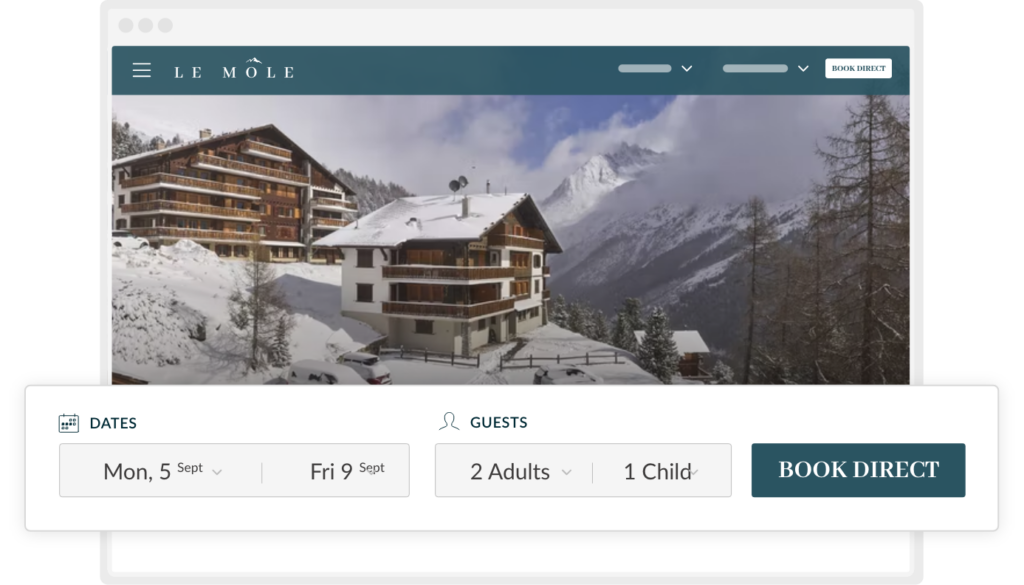
O Website Manager da eviivo inclui templates otimizados para SEO e mobile-friendly sem custos adicionais de alojamento ou design. As propriedades sem website podem criar um facilmente através do Website Builder drag-and-drop. Já as propriedades com website próprio podem integrar o motor de reservas da eviivo através de botões, widgets de pesquisa ou páginas de reserva alinhadas com a sua marca.
2. Adicione um motor de reservas sem comissões ao seu website
Sem um motor de reservas, o seu website pode apresentar o hotel, mas não aceitar reservas diretamente. Os visitantes podem navegar pelas páginas e consultar fotografias, mas acabarão por concluir a reserva numa OTA — e acabará por pagar comissão por um hóspede que já estava preparado para reservar diretamente.
Um motor de reservas integra-se no website e gere todo o processo de reserva: os hóspedes selecionam datas, escolhem quartos e extras, introduzem os dados de pagamento e recebem confirmação imediata.
O que procurar num motor de reservas para hotéis:
- Reservas sem comissões: alguns motores de reservas cobram taxas percentuais por reserva, anulando a vantagem de reduzir custos OTA.
- Sincronização em tempo real com o PMS e as principais OTAs para evitar overbookings.
- Processamento de pagamentos seguro com conformidade PCI e validação 3D Secure.
- Interface mobile-friendly para reservas a partir de qualquer dispositivo.
- Emails de confirmação automáticos enviados imediatamente após cada reserva.
- Páginas de checkout personalizáveis para recolher informações específicas dos hóspedes.
A eviivo Suite™ inclui um motor de reservas sem comissões em todas as subscrições. Cada reserva efetuada através do Booking Engine da eviivo é integrada diretamente no calendário de reservas da propriedade, sem taxas adicionais do motor de reservas nem qualquer comissão.
3. Utilize preços e promoções para incentivar reservas diretas
Os acordos de paridade tarifária com OTAs impedem frequentemente que anuncie no seu próprio website uma tarifa pública inferior à apresentada na Booking.com ou Expedia. No entanto, a paridade tarifária não significa que não possa tornar o seu canal direto mais atrativo para os hóspedes.
Ofertas exclusivas para reservas diretas, pacotes e promoções de valor acrescentado dão aos hóspedes motivos reais para reservarem diretamente sem violar quaisquer acordos com OTAs.
- Descontos early booking para reservas antecipadas.
- Pacotes que combinam alojamento com extras, como pequeno-almoço ou estacionamento.
- Códigos promocionais exclusivos para hóspedes recorrentes.
Ofertas visíveis apenas no seu website direto e ocultas de comparadores OTA e concorrentes através de proteções captcha. Este tipo de promoção é particularmente eficaz porque cria um verdadeiro incentivo à reserva direta sem reduzir publicamente as tarifas OTA.
A eviivo Suite™ inclui o Promo Manager, uma ferramenta compatível com todos estes formatos promocionais: preços “Antes/Agora”, ofertas early booking e last minute, descontos para estadias prolongadas, pacotes, códigos promocionais, ofertas opaque protegidas por captcha e promoções específicas por canal. Além disso, pode criar promoções visíveis apenas no seu website direto, enquanto os controlos específicos por canal permitem decidir exatamente quais OTAs têm acesso a determinadas promoções, tarifas e políticas. As regras de preços dinâmicos também permitem ajustar automaticamente as tarifas com base nos níveis de inventário, garantindo preços sempre alinhados com a procura sem necessidade de intervenção manual.
4. Utilize as OTAs como montra (e não como único canal)
Eliminar completamente as OTAs raramente é a melhor estratégia. As OTAs investem milhares de milhões em marketing para colocar a sua propriedade diante de viajantes que provavelmente nunca encontrariam o seu website direto através de pesquisas online. O chamado “efeito montra” — quando um hóspede descobre a sua propriedade numa OTA e depois pesquisa diretamente o nome do alojamento para visitar o website oficial — está amplamente documentado e joga a seu favor quando o seu website está otimizado para converter visitantes em reservas.
A melhor estratégia consiste em utilizar as OTAs para gerar visibilidade, tornando simultaneamente a experiência de reserva direta mais apelativa para os viajantes. Publique a sua propriedade nos principais canais, como Booking.com, Expedia e Airbnb, para maximizar o alcance, mas invista no seu website direto para que os hóspedes encontrem vantagens como:
- Ofertas exclusivas.
- Políticas de cancelamento mais claras.
- Extras que não conseguem obter através de uma OTA.
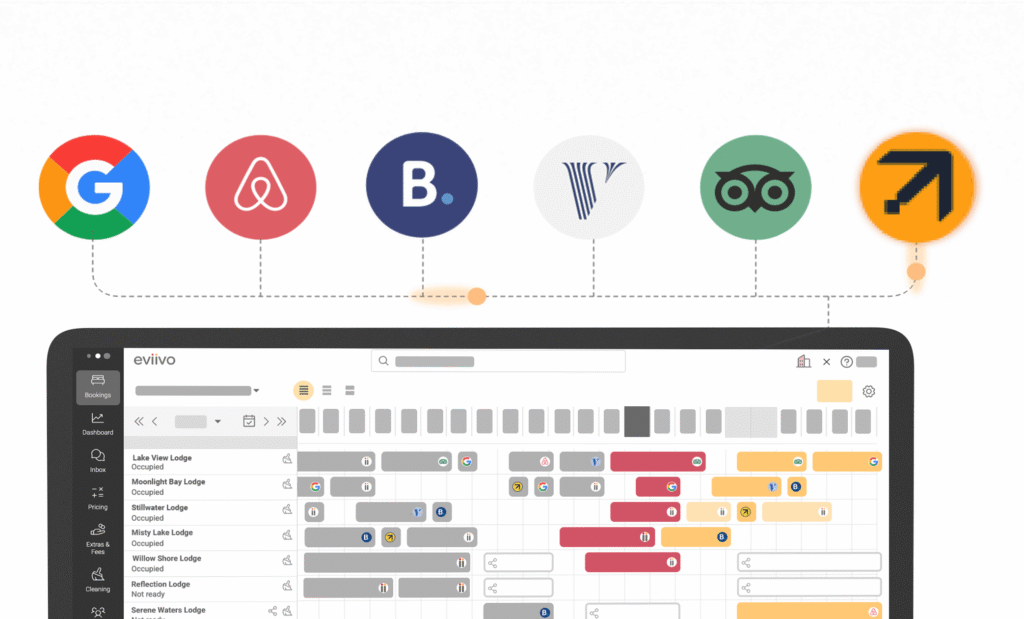
Esta estratégia de distribuição exige um channel manager capaz de sincronizar em tempo real tarifas, disponibilidade e conteúdos em todos os canais conectados. Sem sincronização em tempo real, aumenta o risco de overbookings e os impactos negativos associados à experiência do hóspede. O Channel Manager da eviivo mantém ligações API bidirecionais com Booking.com, Airbnb, Expedia, Vrbo, Agoda, Google Hotel Ads e muitos outros canais, sincronizando simultaneamente tarifas, disponibilidade, conteúdos, políticas, fotografias, mensagens de hóspedes e avaliações. Além disso, os preços específicos por canal permitem definir tarifas diferentes para cada plataforma, bem como abrir ou fechar canais dinamicamente com base nos níveis de procura em tempo real.
O objetivo é alcançar uma estratégia de distribuição equilibrada: utilizar as OTAs para preencher quartos em épocas de menor procura e gerar notoriedade ao longo de todo o ano, enquanto o canal direto capta uma fatia crescente das reservas com margem total.
5. Otimize o seu website para motores de pesquisa e ferramentas de pesquisa com IA
Antes de receber reservas, o website do seu hotel precisa de ser encontrado online. Os viajantes que não dependem exclusivamente das OTAs recorrem frequentemente a motores de pesquisa como Google ou Bing e, cada vez mais, a ferramentas de pesquisa impulsionadas por inteligência artificial. Por isso, é fundamental otimizar o seu website para ambas as plataformas.
Por exemplo, quando um viajante pesquisa “boutique hotel em [sua cidade]” ou “B&B perto de [atração local]” no Google, pretende que o seu website apareça nesses resultados. O SEO para hotéis não consiste em competir com OTAs por termos genéricos como “hotéis em Paris”, mas sim em dominar pesquisas onde o nome da propriedade, a localização e o posicionamento único da sua marca representam uma vantagem competitiva.
Isto tornou-se ainda mais relevante na era das pesquisas impulsionadas por IA e modelos LLM (Large Language Models), como os modelos GPT da OpenAI e o Gemini da Google. Os estudos da Phocuswright mostram uma rápida adoção da IA no planeamento de viagens, com quase 40% dos viajantes norte-americanos a utilizarem ferramentas de IA generativa para planear viagens apenas em 2025. Isto significa que hoje é necessário otimizar o seu website tanto para SERPs (Search Engine Results Pages) como para pesquisas de viagens impulsionadas por IA.
Comece pelos fundamentos tradicionais de SEO:
- Garanta que os aspetos técnicos essenciais de SEO estão cobertos: carregamento rápido, design responsive, estrutura de URLs limpa e links internos funcionais.
- Reivindique e otimize o seu Google Business Profile com horários corretos, fotografias, descrições e link direto para reservas.
- Utilize palavras-chave geolocalizadas em títulos de páginas, headings e meta descriptions (por exemplo, “hotel à beira-mar no Porto” em vez de apenas “hotel de charme”).
- Produza conteúdos sobre o seu destino, como guias sazonais, calendários de eventos e recomendações de restaurantes, para atrair tráfego orgânico de viajantes que estejam a planear a viagem.
Depois, otimize também os conteúdos para ferramentas de IA:
- Destaque experiências únicas oferecidas pela sua propriedade nos conteúdos do website direto.
- Recolha e publique avaliações de hóspedes para aumentar a credibilidade e melhorar as hipóteses de aparecer em recomendações geradas por IA.
- Crie uma página FAQ com conteúdo estruturado baseado em perguntas reais dos viajantes, algo que os modelos de IA conseguem interpretar e extrair facilmente.
O Website Builder integrado da eviivo Suite™ gera páginas otimizadas para SEO com suporte para títulos SEO, meta descriptions, legendas de imagens e códigos de tracking analítico integrados em todos os templates. Além disso, pode adicionar páginas personalizadas otimizadas para pesquisas IA, como FAQs, diretamente nos templates integrados da eviivo. O AI Prompter integrado ajuda a criar descrições profissionais e otimizadas para motores de pesquisa para quartos e páginas da propriedade, enquanto o AI Translator permite traduzir esses conteúdos para vários idiomas, ajudando-o a alcançar viajantes internacionais que pesquisam na sua língua nativa.
6. Utilize avaliações de hóspedes e gestão de reputação para gerar confiança nas reservas
Um viajante que compara o seu website direto com um anúncio numa OTA vai procurar sobretudo uma coisa: prova social. O Global Traveler Survey da eviivo revelou que as avaliações de hóspedes são o fator mais influente na escolha de onde ficar para 1 em cada 5 viajantes. Gerir ativamente a sua reputação em várias plataformas afeta diretamente o número de visitantes que se convertem em reservas diretas.
Isto significa que deve:
- Recolher avaliações de forma consistente após cada estadia.
- Responder a todas as avaliações (agradecendo genuinamente as positivas e respondendo às negativas com reconhecimento e ação).
- Mostrar as melhores avaliações no seu website direto.
A eviivo Suite™ automatiza a recolha de avaliações da Booking.com, Airbnb, Expedia e Vrbo, reunindo todas as avaliações numa caixa de entrada unificada para facilitar a monitorização e a resposta. Também pode selecionar as avaliações apresentadas no seu website direto, destacando o feedback que melhor representa a experiência dos seus hóspedes e gera confiança junto de novos visitantes que estejam a considerar reservar diretamente.
7. Automatize a comunicação com hóspedes para criar fidelização ao longo de toda a jornada
A relação entre a sua propriedade e um hóspede que reserva diretamente não começa no check-in nem termina no check-out. Cada ponto de contacto — desde o email de confirmação até ao acompanhamento pós-estadia — é uma oportunidade para oferecer uma experiência que as OTAs não conseguem igualar e preparar a próxima reserva direta.
Uma sequência automatizada de mensagens bem estruturada cobre cada etapa da jornada do hóspede:
- Após a reserva: Email de confirmação com detalhes da reserva, informações da propriedade e uma mensagem de boas-vindas personalizada.
- Antes da chegada: Instruções de check-in, recomendações locais e upsells opcionais (estacionamento, pequeno-almoço, early check-in ou late checkout).
- Durante a estadia: Mensagem de acompanhamento a perguntar se tudo corresponde às expectativas.
- Após a estadia: Mensagem de agradecimento com pedido de avaliação e um código promocional com desconto para a próxima reserva direta.
Esse código promocional pós-estadia fecha o ciclo: um hóspede que teve uma excelente experiência e recebe um incentivo personalizado tem muito mais probabilidade de reservar diretamente da próxima vez em vez de voltar a uma OTA.
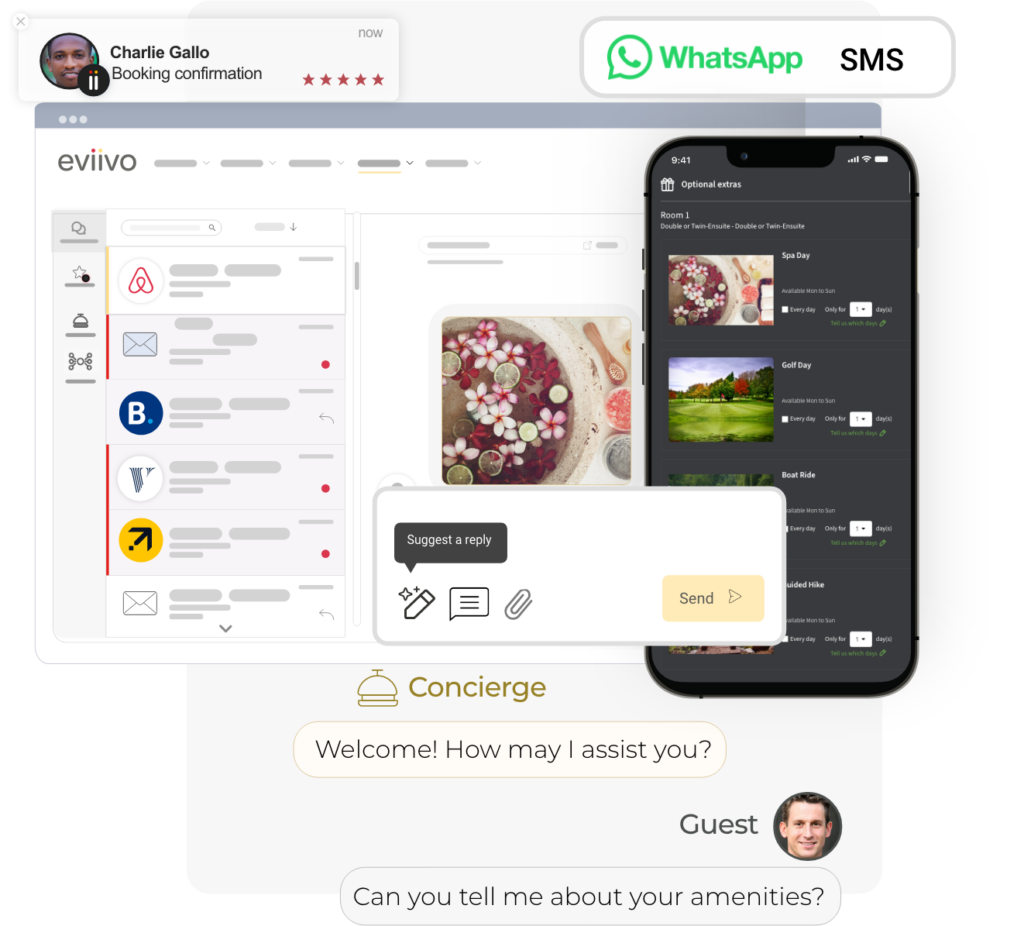
O Guest Manager da eviivo Suite™ gere toda esta sequência através de um editor de emails drag-and-drop, automatizações acionadas em cada etapa e suporte para envio de mensagens por email, WhatsApp e SMS. Além disso, o eviivo Concierge™ — um chatbot com IA treinado com os dados e conteúdos do website da sua propriedade — responde a perguntas de hóspedes 24/7 diretamente no seu website, ajudando a orientar os visitantes para a reserva e funcionando como uma receção online disponível a qualquer hora.
Para email marketing além das mensagens automáticas relacionadas com estadias, a eviivo Suite permite gerir perfis completos de hóspedes numa agenda de contactos que separa os emails reais dos hóspedes dos emails mascarados das OTAs. Também integra com Brevo, Mailchimp ou o seu CRM através do Zapier, permitindo criar listas segmentadas e enviar campanhas direcionadas a hóspedes anteriores com ofertas sazonais, anúncios de eventos ou recompensas de fidelização. O nosso guia para aumentar a satisfação dos hóspedes e as receitas aprofunda estas estratégias de comunicação.
8. Crie um programa de fidelização ou incentivos para hóspedes recorrentes
Não precisa de um programa de fidelização baseado em pontos para incentivar reservas diretas repetidas. Hotéis independentes e B&B podem criar fidelização através de detalhes simples e personalizados que grandes cadeias e OTAs dificilmente conseguem replicar.
Algumas estratégias que funcionam particularmente bem para propriedades independentes:
- Códigos promocionais para hóspedes recorrentes: Envie um código promocional exclusivo no email pós-estadia que desbloqueie um desconto ou benefício adicional na próxima reserva direta.
- Tarifas para membros: Crie uma tarifa “apenas para membros” visível no seu website para hóspedes que introduzam um ID de membro. Pode estar disponível gratuitamente para qualquer pessoa que se registe, mas permanecer oculta para comparadores OTA.
- Ofertas privadas para hóspedes anteriores: Utilize páginas privadas do website acessíveis apenas através de referência de reserva ou ID de membro para oferecer pacotes exclusivos, promoções sazonais ou acesso antecipado a datas de elevada procura.
A eviivo Suite™ suporta códigos promocionais, códigos de fidelização e IDs de membro que desbloqueiam tarifas exclusivas através do seu website. A funcionalidade de páginas privadas também permite criar conteúdos exclusivos acessíveis através de referência de reserva ou ID de membro.
Combinado com as mensagens automáticas pós-estadia da eviivo, obtém um ciclo completo: hóspede reserva diretamente → desfruta da estadia → recebe um incentivo personalizado → volta a reservar diretamente.
9. Utilize metabuscadores e canais pagos para gerar tráfego direto
Metabuscadores como Google Hotel Ads, trivago e KAYAK agregam preços de hotéis de múltiplas fontes e apresentam-nos lado a lado. Quando um viajante procura alojamento e vê a sua propriedade no Google com preços da Booking.com, Expedia e do seu website direto, pode clicar na fonte que oferece a melhor opção. Se a sua tarifa direta for competitiva — ou ainda melhor graças a promoções ou tarifas específicas para Google — os metabuscadores tornam-se um verdadeiro canal de reservas diretas.
O Google Hotel Ads é o canal metabuscador prioritário para muitas propriedades independentes porque aparece diretamente nos resultados de pesquisa Google e no Google Maps. Quando um viajante pesquisa o nome da sua propriedade, as suas tarifas e o botão “Website oficial” aparecem no painel de informação juntamente com os preços OTA. Propriedades com tarifas diretas competitivas e um motor de reservas funcional conseguem captar uma parte significativa dos cliques apenas através desta presença.
O retargeting é outro canal pago que vale a pena considerar: visitantes que visualizaram o seu website mas não concluíram a reserva podem ver anúncios direcionados a incentivá-los a regressar e reservar diretamente. Isto funciona particularmente bem para propriedades em destinos onde os viajantes comparam várias opções antes de tomar uma decisão.
O Channel Manager da eviivo Suite™ liga-se ao Google Hotel Ads (como Google Hotel Ads Certified Partner), trivago e KAYAK. As redes sociais, parcerias locais com negócios e atrações próximas e publicidade segmentada em plataformas como Facebook e Instagram também podem aumentar a notoriedade e gerar tráfego para a sua página de reservas diretas. Para uma visão mais ampla sobre como gerar tráfego e reservas, o nosso guia de estratégias de marketing hoteleiro apresenta mais 14 táticas adicionais.
Como equilibrar as OTAs e as reservas diretas
O objetivo não é abandonar as OTAs, mas sim reduzir a dependência delas enquanto aumenta a percentagem de reservas feitas sem comissão através do seu próprio website. Mesmo os alojamentos que conseguem entre 40% e 60% de reservas diretas continuam a depender das OTAs para ganhar visibilidade e preencher períodos de menor procura.
Para alcançar o equilíbrio certo entre canais de reserva, é importante acompanhar regularmente o seu mix de distribuição. Deve saber que percentagem das reservas vem de cada OTA, que percentagem chega diretamente e qual é a receita efetiva gerada por cada canal após as comissões. Um quarto reservado por 150€ através da Booking.com (com uma comissão de 15%) gera um valor líquido de 127,50€. O mesmo quarto reservado diretamente por 145€ — um desconto de 3% como oferta exclusiva web — gera 145€. Assim, a reserva direta é mais rentável mesmo oferecendo um desconto.
Concentre-se na rentabilidade por reserva e não apenas na ocupação. Analise o custo de aquisição (CPA) por canal, acompanhe o valor do ciclo de vida do cliente (LTV) dos hóspedes que reservam diretamente em comparação com os que chegam através das OTAs e monitorize a evolução da taxa de conversão das reservas diretas. Um alojamento com 80% de ocupação e comissões OTA elevadas é frequentemente menos rentável do que outro com 70% de ocupação mas com uma maior percentagem de reservas diretas. Utilize as OTAs de forma estratégica: apoie-se nelas durante períodos de baixa procura e reduza a disponibilidade nesses canais durante a época alta, quando o seu canal direto consegue preencher quartos sem custos de comissão.
eviivo Suite centraliza toda a informação dos clientes para ajudar a compreender o valor do ciclo de vida dos hóspedes. Uma ampla variedade de indicadores-chave, gráficos e relatórios integrados permite acompanhar custos de comissão, volume de reservas e receita por canal em qualquer intervalo de datas, enquanto o criador de relatórios personalizados oferece análises comparativas sobre comissões totais de OTAs por origem de reserva ou canal.
Dicas para aumentar as reservas diretas dos nossos parceiros especialistas
Mark Simpson, fundador da plataforma de reservas diretas Boostly, recomenda as seguintes estratégias para alojamentos que pretendem reduzir a dependência das OTAs:
“Crie um website de reservas diretas que converta. O seu website deve destacar os principais pontos da região, recomendações locais e fotografias e vídeos de alta qualidade que tornem as páginas mais apelativas. Um website de reservas diretas deve ser fácil de navegar e, acima de tudo, ter um motor de reservas que reproduza a simplicidade de utilização típica das OTAs, que normalmente é a razão pela qual os hóspedes as utilizam em vez de reservar diretamente.
A razão mais comum para um hóspede não reservar diretamente é uma má experiência no website. Se um potencial hóspede tiver dificuldade em encontrar onde reservar ou onde obter a informação correta, provavelmente irá procurar outra opção. O seu website deve incluir uma página de perguntas frequentes, listagens detalhadas, conteúdos de blog atualizados regularmente com informação útil e um motor de reservas intuitivo que apresente claramente tarifas e disponibilidade.”
Estes comentários reforçam a importância da experiência global do website no aumento das reservas diretas. Barrie Poulter, CEO da Inapub, destaca também a importância de prolongar essa experiência durante a estadia do hóspede:
“Quando pensa em reservas diretas para os seus quartos, não deve considerar apenas o processo de reserva do cliente, mas também a experiência que o hóspede espera viver durante a estadia. Menus de comida e bebidas atualizados e facilmente acessíveis em dispositivos móveis fazem realmente a diferença, assim como uma galeria com imagens de alta qualidade mostrando clientes a desfrutar do seu bar ou restaurante. Pode reforçar essa experiência oferecendo uma bebida gratuita no bar aos hóspedes que reservam diretamente.
Mostrar e depois cumprir a experiência prometida aos clientes ajudará tanto a aumentar novas reservas como a incentivar reservas repetidas.”
Aumente as reservas diretas com eviivo Suite
Transferir reservas das OTAs para o seu canal direto exige a infraestrutura certa:
- um motor de reservas sem comissões integrado num website criado para converter
- um channel manager que sincronize tarifas, disponibilidade, conteúdos, fotografias, políticas, mensagens aos hóspedes, promoções e aprovações de reservas nas principais OTAs
- ferramentas automatizadas de comunicação com hóspedes que ajudem a criar relações e impulsionar novas reservas e reservas repetidas
- ferramentas de preços e promoções que tornem o seu canal direto a escolha mais atrativa
eviivo Suite reúne tudo isso numa única plataforma:
- Um Booking Engine sem comissões e um website otimizado para motores de pesquisa e dispositivos móveis
- Conectividade bidirecional avançada com Booking.com, Airbnb, Expedia, Vrbo, Google Hotel Ads e muito mais através de um Channel Manager integrado
- Mensagens automatizadas e um chatbot web com IA que acompanha os hóspedes ao longo do processo de reserva
- Ofertas exclusivas web, códigos promocionais e preços dinâmicos que recompensam hóspedes que reservam diretamente
Quer descobrir como funciona para o seu hotel? Reserve uma demonstração e os nossos consultores mostrarão como eviivo Suite pode tornar-se a sua nova plataforma tudo-em-um para aumentar reservas diretas.
FAQs
As comissões variam conforme a OTA e a região. A Booking.com normalmente cobra entre 10% e 25% por reserva. A Expedia aplica entre 10% e 30%, dependendo de fatores como mercado e tipo de alojamento. A Airbnb utiliza um modelo de comissão partilhada (em que o anfitrião paga aproximadamente 3% e o hóspede paga uma taxa de serviço) ou um modelo em que apenas o anfitrião paga, normalmente entre 14% e 16%. Algumas destas taxas podem ser negociáveis e os posicionamentos promocionais nas OTAs geralmente implicam níveis de comissão mais elevados.
Sim — e muitos já o fazem. Os alojamentos independentes competem através da personalização, do relacionamento direto e de ofertas exclusivas que as OTAs não conseguem replicar. Um hóspede que fica na sua pousada ou hotel boutique e recebe uma mensagem personalizada antes da chegada, uma receção calorosa no check-in e um código promocional para a próxima estadia tem um motivo real para reservar diretamente na próxima vez — algo que nenhum programa de fidelização OTA consegue igualar.
Os alojamentos independentes que utilizam eviivo Suite afirmam ter mais do que duplicado a percentagem de reservas diretas com a plataforma, e alguns atingiram mais de 90% de reservas diretas sobre o total.
Uma garantia do melhor preço transmite confiança aos hóspedes e assegura-lhes que não encontrarão uma tarifa mais baixa noutro local. No entanto, os acordos de paridade tarifária com OTAs podem limitar a possibilidade de anunciar preços públicos inferiores no seu próprio website. A abordagem mais eficaz é oferecer o mesmo preço com valor acrescentado: pacotes exclusivos web, extras gratuitos (pequeno-almoço, estacionamento, upgrades de quarto) ou códigos promocionais para hóspedes recorrentes. Os hóspedes percebem assim a reserva direta como a melhor opção, mesmo quando a tarifa base é exatamente a mesma.
 Também pode estar interessado em...