Cada reserva que llega a través de una OTA suele costarte entre un 15 % y un 30 % en comisiones.
Y esa cifra crece rápidamente. Para un hotel independiente con una tarifa media de 150€ por noche, eso supone entre 22€ y 45€ por habitación y noche que van directamente a Booking.com, Expedia o Airbnb, en lugar de quedarse en tu negocio.
Además, según el informe U.S. Online Travel Overview 2025 de Phocuswright, las OTAs ya concentran más del 40 % de las reservas hoteleras online en Estados Unidos, lo que significa que muchos alojamientos independientes están pagando comisiones sobre casi la mitad de sus ingresos.
Por eso, trasladar más reservas a tu propia web —donde no pagas ninguna comisión— es una de las decisiones más rentables que puedes tomar para aumentar la rentabilidad de tu alojamiento. Pero no ocurre por casualidad. Las reservas directas requieren un motor de reservas potente, una página web que genere confianza, tarifas que premien a los huéspedes por reservar directamente y relaciones sólidas con los clientes que les animen a volver sin necesidad de una OTA como intermediaria.
En esta guía descubrirás nueve estrategias prácticas para aumentar las reservas directas de tu hotel, B&B o posada, desde la optimización de tu página web y la visibilidad en buscadores hasta la comunicación con huéspedes y los programas de fidelización.
Por qué las reservas directas son clave para los hoteles independientes
El beneficio económico de las reservas directas es evidente: eliminan la comisión que pagarías a una OTA en cada reserva. Por ejemplo, si tu alojamiento alcanza un 60% de ocupación en 15 habitaciones con una tarifa media de 140€ por noche, podrías ahorrar aproximadamente entre 27.000€ y 45.000€ al año trasladando solo la mitad de tus reservas OTA a canales directos. Es un margen que impacta directamente en tus beneficios o que puedes reinvertir en la experiencia del huésped, el personal o el marketing para generar todavía más reservas.
Más allá del ahorro en comisiones, las reservas directas te ofrecen algo que las OTAs limitan deliberadamente: los datos de los huéspedes. Cuando alguien reserva a través de Booking.com o Airbnb, la OTA controla esa relación. Tú solo recibes un correo electrónico enmascarado y datos limitados del huésped. Cuando reservan desde tu web, obtienes su correo real, preferencias de reserva e historial de estancia, información que puedes utilizar para enviar ofertas personalizadas, fomentar reservas repetidas y crear una relación directa con el huésped fuera de cualquier plataforma OTA.
Las reservas directas también te permiten controlar la experiencia del huésped desde el primer contacto. Tú decides la política de cancelación, las condiciones de pago, los mensajes de confirmación y la comunicación previa a la llegada. Ese control influye directamente en cómo los huéspedes perciben tu alojamiento incluso antes de llegar.
Cómo aumentar las reservas directas: 9 estrategias que funcionan
Cada una de estas estrategias aborda una parte específica del reto de aumentar las reservas directas. Algunas son elementos básicos que debes tener implementados antes de que cualquier otra acción funcione. Otras se apoyan en esa base para mejorar los resultados con el tiempo.
1. Crea una web diseñada para convertir visitas en huéspedes
Tu página web es el activo más importante para generar reservas directas. Cuando alguien visita tu web oficial después de descubrir tu hotel en una OTA —un hábito que practican el 52 % de los viajeros, según un estudio de Google— esa web debe cargar rápido, transmitir profesionalidad y facilitar al máximo el proceso de reserva. Por el contrario, una web lenta, anticuada o confusa hará que ese visitante vuelva directamente a la OTA.
Sin embargo, una página limpia, responsive y optimizada para móviles, con fotografías profesionales, descripciones claras de las habitaciones, tarifas transparentes y un botón visible de “Reservar ahora” en cada página, puede convertir a un visitante en un huésped sin comisiones.
Elementos esenciales que tu web necesita para impulsar las reservas directas:
- Diseño responsive para móviles: más de un tercio de las ventas de viajes se realizan desde dispositivos móviles. Una web que no funcione correctamente en móvil pierde reservas inmediatamente.
- Fotografía profesional en alta resolución que muestre habitaciones individuales, zonas comunes, el alojamiento completo y los alrededores.
- Información clara y actualizada sobre tarifas y disponibilidad para que los huéspedes puedan comparar con las OTAs.
- Un botón destacado de “Reservar ahora” visible en la parte superior de cada página.
- Velocidad de carga rápida: cada segundo extra aumenta la tasa de abandono.
- Elementos de confianza como opiniones de huéspedes, premios y sellos de pago seguro.
- Descripciones atractivas de habitaciones y del alojamiento con ortografía y gramática impecables.
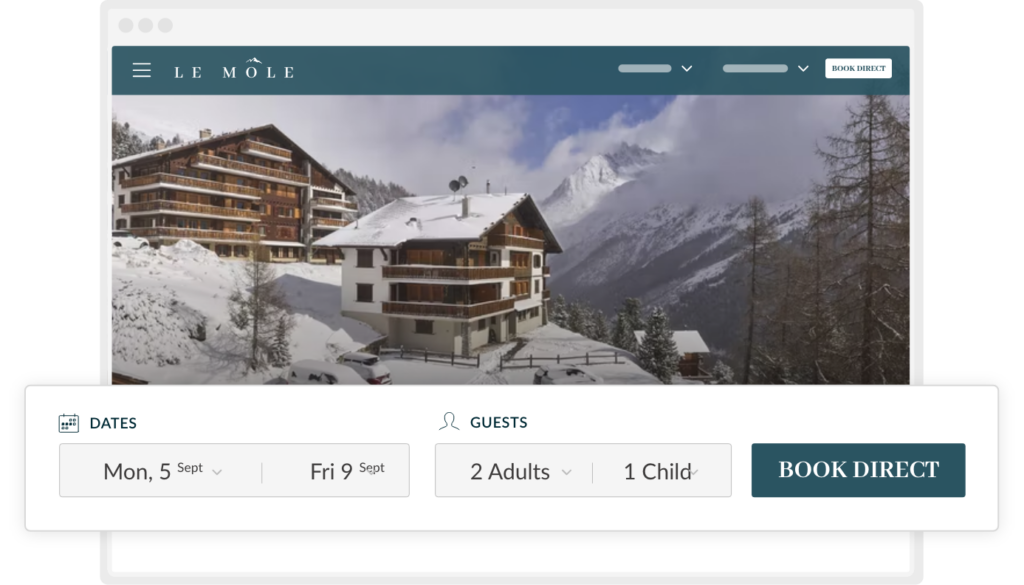
Website Manager de eviivo incluye plantillas web optimizadas para SEO y adaptadas a móviles sin costes adicionales de hosting o diseño. Los alojamientos sin web pueden crear una fácilmente con el constructor drag-and-drop Website Builder. Aquellos que ya tienen una web pueden añadir el motor de reservas de eviivo mediante un botón, widget de búsqueda o páginas de reserva integradas con su marca.
2. Añade un motor de reservas sin comisiones a tu web
Sin un motor de reservas, tu web puede mostrar tu hotel, pero no aceptar reservas directamente. Los visitantes pueden navegar por tus páginas y consultar las fotos, pero terminarán abandonando la web para completar la reserva en una OTA, y acabarás pagando comisión por un huésped que ya estaba listo para reservar directamente.
Un motor de reservas se integra en tu web y gestiona todo el proceso de reserva: los huéspedes seleccionan fechas, eligen habitación y extras, introducen sus datos de pago y reciben confirmación inmediata.
Qué debes buscar en un motor de reservas para hoteles:
- Reservas sin comisión: algunos motores de reservas cobran una comisión por reserva, lo que elimina el beneficio de reducir costes OTA.
- Sincronización en tiempo real con tu PMS y las principales OTAs para evitar overbookings.
- Procesamiento de pagos seguro con cumplimiento PCI y validación 3D Secure.
- Interfaz optimizada para móviles para facilitar las reservas desde cualquier dispositivo.
- Emails de confirmación automáticos enviados instantáneamente tras cada reserva.
- Páginas de checkout personalizables para recopilar información específica de los huéspedes.
eviivo Suite™ incluye un motor de reservas sin comisiones con cada suscripción. Cada reserva realizada a través del Booking Engine de eviivo se sincroniza automáticamente con tu calendario de reservas, sin costes por uso del motor de reservas ni comisiones adicionales.
3. Utiliza precios y promociones para impulsar las reservas directas
Los acuerdos de paridad tarifaria con las OTAs suelen impedir que publiques en tu propia web un precio inferior al que aparece en Booking.com o Expedia. Sin embargo, la paridad tarifaria no significa que no puedas hacer que tu canal directo resulte más atractivo para los huéspedes.
Las ofertas exclusivas, paquetes y promociones con valor añadido ofrecen motivos reales para reservar directamente sin incumplir ningún acuerdo con las OTAs.
- Descuentos por reserva anticipada.
- Paquetes que combinan alojamiento con extras como desayuno o parking.
- Códigos promocionales exclusivos para huéspedes recurrentes.
Ofertas visibles únicamente en tu web directa y ocultas a comparadores de precios OTA y competidores mediante controles captcha. Este último tipo de promociones resulta especialmente eficaz porque crea un incentivo real para reservar directamente sin reducir públicamente tus tarifas OTA.
eviivo Suite™ incluye Promo Manager, una herramienta compatible con todos estos formatos promocionales: precios “Antes/Ahora”, ofertas de última hora y reserva anticipada, descuentos para estancias largas, paquetes, códigos promocionales, promociones opacas protegidas por captcha y ofertas específicas por canal.
Además, puedes crear promociones que solo aparezcan en tu web directa, mientras que los controles específicos por canal te permiten decidir exactamente qué OTAs tienen acceso a determinadas promociones, tarifas y políticas. Las reglas de precios dinámicos también permiten ajustar automáticamente las tarifas en función del inventario disponible, para que siempre adaptes los precios a la demanda sin necesidad de intervención manual.
4. Aprovecha las OTAs como escaparate (no como tu único canal)
Eliminar completamente las OTAs rara vez es la mejor estrategia. Las OTAs invierten miles de millones en marketing para mostrar tu alojamiento a viajeros que probablemente nunca encontrarían tu web directa mediante búsquedas orgánicas. El llamado “efecto escaparate” —cuando un huésped descubre tu alojamiento en una OTA y después busca directamente el nombre de tu hotel para consultar tu web— está ampliamente demostrado y juega a tu favor cuando tu página está optimizada para convertir visitas en reservas.
La mejor estrategia consiste en utilizar las OTAs para ganar visibilidad, mientras conviertes la experiencia de reserva directa en la opción más atractiva para los viajeros. Publica tu alojamiento en canales principales como Booking.com, Expedia y Airbnb para maximizar el alcance, pero invierte en tu propia web para que los huéspedes encuentren ventajas como:
- Ofertas exclusivas.
- Políticas de cancelación más claras.
- Extras que no pueden obtener reservando a través de una OTA.
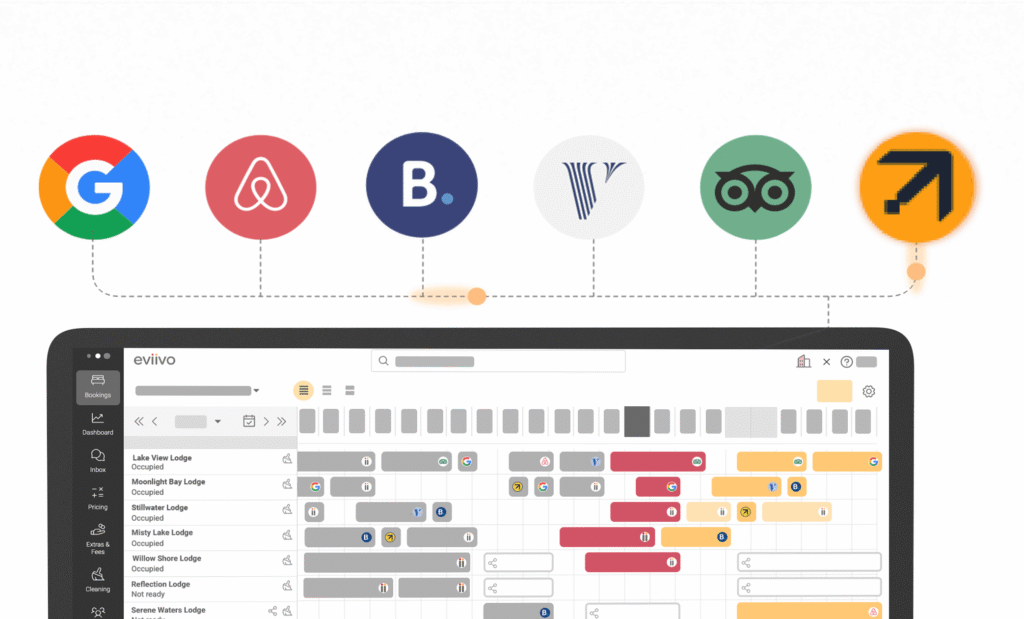
Esta estrategia de distribución requiere un channel manager que mantenga sincronizados en tiempo real tus tarifas, disponibilidad y contenido en todos los canales conectados. Sin sincronización en tiempo real, aumentan los riesgos de overbooking y los problemas asociados a la experiencia del huésped. El Channel Manager de eviivo mantiene conexiones API bidireccionales con Booking.com, Airbnb, Expedia, Vrbo, Agoda, Google Hotel Ads y muchos otros canales, sincronizando simultáneamente tarifas, disponibilidad, contenido, políticas, fotografías, mensajes de huéspedes y reseñas. Además, los precios específicos por canal te permiten configurar tarifas diferentes según la plataforma, así como abrir o cerrar canales dinámicamente en función de la demanda en tiempo real.
El objetivo es lograr una estrategia de distribución equilibrada: que las OTAs ayuden a llenar habitaciones en temporada baja y generen visibilidad durante todo el año, mientras que tu canal directo capta una parte cada vez mayor de las reservas con margen completo.
5. Optimiza tu web para buscadores y herramientas de búsqueda con IA
Antes de recibir reservas, tu página web debe poder encontrarse fácilmente. Los viajeros que no dependen exclusivamente de las OTAs suelen recurrir a motores de búsqueda como Google o Bing y, cada vez más, a herramientas de búsqueda impulsadas por inteligencia artificial. Por eso es fundamental optimizar tu web para ambas plataformas.
Por ejemplo, cuando un viajero busca “hotel boutique en [tu ciudad]” o “B&B cerca de [punto turístico]” en Google, quieres que tu web aparezca entre los resultados. El SEO para hoteles no consiste en competir con las OTAs por términos genéricos como “hoteles en París”, sino en dominar búsquedas donde el nombre de tu alojamiento, tu ubicación y tu propuesta diferencial te aportan ventaja.
Esto es todavía más importante en la nueva era de las búsquedas impulsadas por IA y modelos LLM (Large Language Models), como los modelos GPT de OpenAI o Gemini de Google. Las investigaciones de Phocuswright muestran una rápida adopción de la IA en la planificación de viajes, con cerca del 40 % de los viajeros estadounidenses utilizando herramientas de IA generativa para organizar viajes solo en 2025. Esto significa que necesitas optimizar tu web tanto para las SERPs (páginas de resultados de buscadores) como para las búsquedas turísticas impulsadas por IA.
Empieza por los fundamentos clásicos del SEO:
- Asegúrate de cubrir los aspectos técnicos básicos del SEO: velocidad de carga rápida, diseño responsive, estructura limpia de URLs y enlaces internos funcionales.
- Reclama y optimiza tu perfil de Google Business Profile con horarios correctos, fotografías, descripciones y un enlace directo a reservas.
- Utiliza palabras clave locales en títulos, encabezados y metadescripciones (por ejemplo, “hotel con vistas al mar en Málaga” en lugar de simplemente “hotel con encanto”).
- Crea contenido sobre tu destino, como guías de temporada, calendarios de eventos y recomendaciones de restaurantes, para atraer tráfico orgánico de viajeros que estén planificando su estancia.
Después, optimiza también tu contenido para herramientas de IA:
- Destaca experiencias únicas ofrecidas por tu alojamiento dentro del contenido de tu web directa.
- Recoge y publica opiniones de huéspedes para aumentar la credibilidad y mejorar las posibilidades de aparecer en recomendaciones generadas por IA.
- Crea una página de preguntas frecuentes (FAQ) con contenido estructurado basado en preguntas reales de los viajeros, algo que los modelos de IA pueden identificar e interpretar fácilmente.
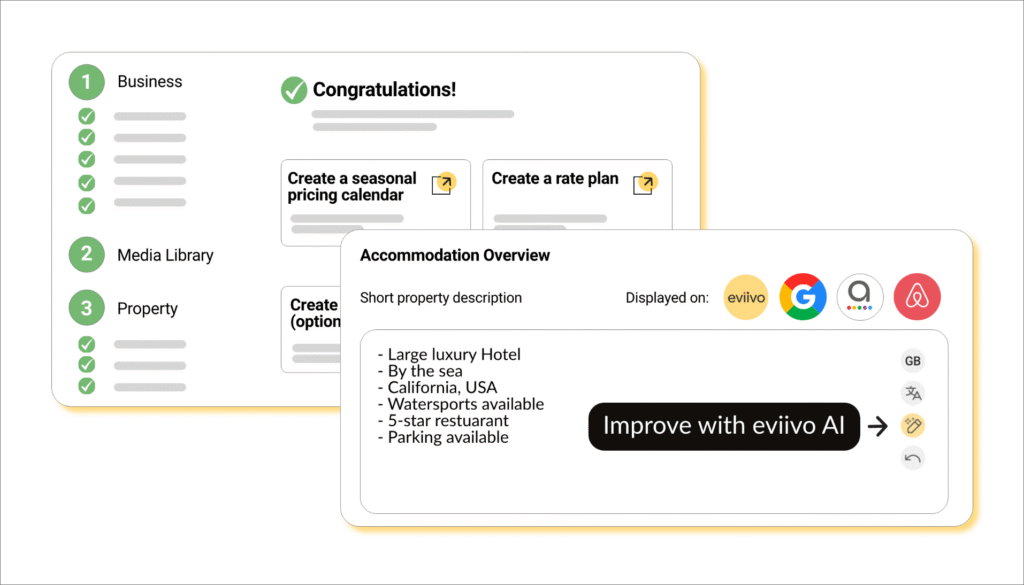
El Website Builder integrado de eviivo Suite™ genera páginas optimizadas para SEO con soporte para títulos SEO, metadescripciones, captions de imágenes y códigos de analítica integrados en cada plantilla. Además, puedes añadir páginas personalizadas optimizadas para búsquedas IA, como FAQs, dentro de las plantillas web integradas de eviivo. El AI Prompter integrado te ayuda a crear descripciones profesionales y optimizadas para buscadores de habitaciones y páginas del alojamiento, mientras que el AI Translator permite traducir ese contenido a varios idiomas para llegar a viajeros internacionales que realizan búsquedas en su lengua nativa.
6. Utiliza las opiniones de huéspedes y la gestión de reputación para generar confianza y aumentar las reservas
Un viajero que compara tu web directa con una ficha OTA busca, ante todo, una cosa: prueba social. La encuesta Global Traveler Survey de eviivo reveló que las opiniones de huéspedes son el factor más influyente a la hora de elegir alojamiento para 1 de cada 5 viajeros. Gestionar activamente tu reputación online en distintas plataformas influye directamente en cuántos visitantes terminan convirtiéndose en reservas directas.
Esto significa que deberías:
- Solicitar opiniones de forma constante después de cada estancia.
- Responder a todas las reseñas (agradeciendo sinceramente las positivas y abordando las negativas con empatía y soluciones).
- Mostrar las mejores opiniones directamente en tu página web.
eviivo Suite™ automatiza la recopilación de reseñas desde Booking.com, Airbnb, Expedia y Vrbo, reuniendo todas las opiniones en una bandeja de entrada unificada para facilitar su gestión y respuesta. Además, puedes seleccionar qué opiniones mostrar en tu web directa para destacar aquellas que mejor representan la experiencia de tus huéspedes y generan mayor confianza entre los viajeros que están considerando reservar directamente.
7. Automatiza la comunicación con huéspedes para fomentar la fidelización durante todo el viaje
La relación entre tu alojamiento y un huésped que reserva directamente no empieza en el check-in ni termina en el check-out. Cada punto de contacto —desde el email de confirmación hasta el seguimiento después de la estancia— es una oportunidad para ofrecer una experiencia que las OTAs no pueden igualar y preparar la próxima reserva directa.
Una secuencia automatizada de mensajes bien estructurada cubre todas las etapas del viaje del huésped:
- Después de la reserva: Email de confirmación con detalles de la reserva, información del alojamiento y una bienvenida personalizada.
- Antes de la llegada: Instrucciones de check-in, recomendaciones locales y upsells opcionales (parking, desayuno, early check-in o late checkout).
- Durante la estancia: Mensaje de seguimiento preguntando si todo cumple las expectativas del huésped.
- Después de la estancia: Mensaje de agradecimiento con solicitud de reseña y un código promocional para su próxima reserva directa.
Ese código promocional post-estancia cierra el círculo: un huésped que disfruta de una gran experiencia y recibe un incentivo personalizado tiene muchas más probabilidades de volver a reservar directamente en lugar de regresar a una OTA.
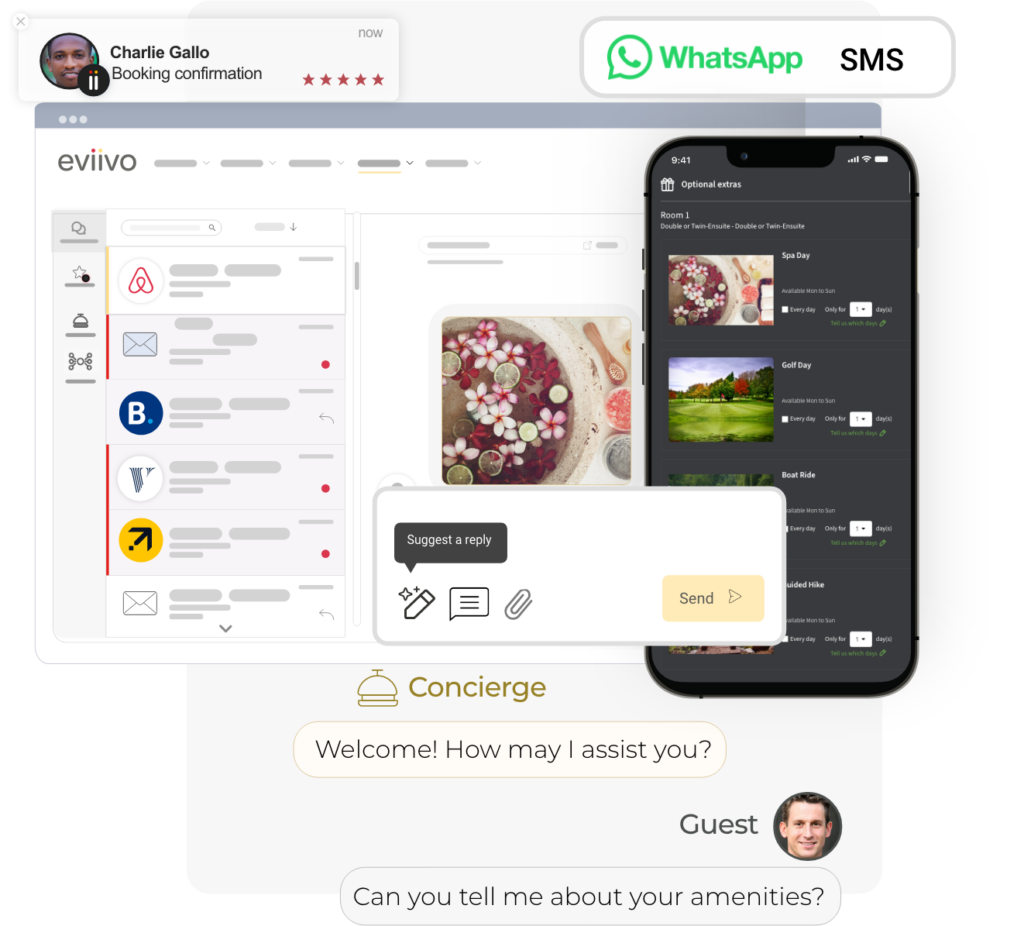
El Guest Manager de eviivo Suite™ gestiona toda esta secuencia mediante un diseñador drag-and-drop de emails, automatizaciones activadas en cada etapa y soporte para envíos a través de email, WhatsApp y SMS. Además, eviivo Concierge™—el chatbot impulsado por IA entrenado con los datos y contenidos de tu alojamiento— responde preguntas de huéspedes 24/7 directamente desde tu web, guiando a los visitantes hacia la reserva y funcionando como una recepción online disponible las 24 horas.
Para el email marketing más allá de los mensajes automáticos relacionados con la estancia, eviivo Suite permite gestionar perfiles completos de huéspedes en una libreta de contactos que separa las direcciones de email reales de los huéspedes de los emails enmascarados de las OTAs. También se integra con Brevo, Mailchimp o tu CRM mediante Zapier, para que puedas crear listas segmentadas y enviar campañas dirigidas a huéspedes anteriores con ofertas de temporada, anuncios de eventos o recompensas de fidelización. Nuestra guía para aumentar la satisfacción del huésped y los ingresos profundiza más en estas estrategias de comunicación.
8. Crea un programa de fidelización o incentivos para huéspedes recurrentes
No necesitas un programa de fidelización basado en puntos para fomentar las reservas directas repetidas. Los hoteles independientes y B&B pueden generar fidelidad mediante detalles sencillos y personalizados que las grandes cadenas y las OTAs no pueden replicar fácilmente.
Algunas estrategias que funcionan especialmente bien para alojamientos independientes:
- Códigos promocionales para huéspedes recurrentes: Envía un código promocional único en el email posterior a la estancia que desbloquee un descuento o valor añadido en su próxima reserva directa.
- Tarifas para miembros: Crea una tarifa “solo para miembros” visible en tu web para huéspedes que introduzcan un ID de miembro. Puede estar disponible gratuitamente para cualquiera que se registre, pero permanecer oculta para comparadores OTA.
- Ofertas privadas para antiguos huéspedes: Utiliza páginas privadas de tu web accesibles únicamente mediante referencia de reserva o ID de miembro para ofrecer paquetes exclusivos, ofertas de temporada o acceso anticipado a fechas de alta demanda.
eviivo Suite™ admite códigos promocionales, códigos de fidelización e IDs de membresía que desbloquean tarifas exclusivas a través de tu página web. La funcionalidad de páginas privadas también te permite crear contenido exclusivo accesible mediante referencia de reserva o ID de miembro.
Combinado con los mensajes automatizados post-estancia de eviivo, obtienes un ciclo completo: huésped reserva directamente → disfruta de su estancia → recibe un incentivo personalizado → vuelve a reservar directamente.
9. Usa metabuscadores y canales de pago para atraer tráfico directo.
Los metabuscadores como Google Hotel Ads, trivago y KAYAK recopilan precios de hoteles desde múltiples fuentes y los muestran uno al lado del otro. Cuando un viajero busca alojamiento y ve tu propiedad en Google con precios de Booking.com, Expedia y tu página web directa, puede hacer clic en la opción que ofrezca la mejor oferta. Si tu tarifa directa es competitiva —o incluso mejor gracias a promociones o tarifas específicas para Google— los metabuscadores se convierten en un canal de reservas directas por derecho propio.
Google Hotel Ads es el metabuscador prioritario para muchos alojamientos independientes porque aparece directamente en los resultados de búsqueda de Google y en Google Maps. Cuando un viajero busca el nombre de tu alojamiento, tus tarifas y un botón de “Sitio web oficial” aparecen en el panel de información junto a los precios OTA. Los alojamientos con tarifas directas competitivas y un motor de reservas funcional pueden captar una parte significativa de los clics únicamente desde esta ubicación.
El retargeting es otro canal de pago que merece la pena considerar: los visitantes que han visto tu página web pero no completaron una reserva pueden ver anuncios dirigidos que les recuerden volver y reservar directamente. Esto funciona especialmente bien para alojamientos en destinos donde los viajeros comparan múltiples opciones antes de decidir.
El Channel Manager de eviivo Suite™ conecta con Google Hotel Ads (como Google Hotel Ads Certified Partner), trivago y KAYAK. Las redes sociales, las colaboraciones locales con negocios y atracciones cercanas y la publicidad segmentada en plataformas como Facebook e Instagram también pueden generar visibilidad y tráfico hacia tu página de reservas directas. Para una visión más amplia sobre cómo generar tráfico y reservas, nuestra guía de estrategias de marketing hotelero cubre 14 tácticas adicionales.
Cómo equilibrar las OTAs y las reservas directas
El objetivo no es abandonar las OTAs, sino reducir la dependencia de ellas mientras aumenta la proporción de reservas que llegan sin comisiones a través de tu propia web. Incluso los alojamientos que consiguen entre un 40% y un 60% de reservas directas siguen dependiendo de las OTAs para ganar visibilidad y cubrir periodos de menor demanda.
Para lograr el equilibrio adecuado entre canales de reserva, es importante analizar regularmente tu mix de distribución. Debes saber qué porcentaje de reservas proviene de cada OTA, qué porcentaje llega de forma directa y cuál es el ingreso real generado por cada canal después de comisiones. Una habitación reservada por 150€ a través de Booking.com (con una comisión del 15%) te deja 127,50€. La misma habitación reservada directamente por 145€ —un 3% más barata como oferta exclusiva web— te deja 145€. Por tanto, la reserva directa resulta más rentable incluso aplicando un descuento.
Céntrate en la rentabilidad por reserva y no únicamente en la ocupación. Analiza el coste de adquisición (CPA) por canal, supervisa el valor de vida del cliente (LTV) de los huéspedes que reservan directamente frente a los que llegan desde OTAs y controla la evolución de tu tasa de conversión directa. Un alojamiento con un 80% de ocupación pagando comisiones completas a OTAs suele ser menos rentable que otro con un 70% de ocupación y una mayor proporción de reservas directas. Utiliza las OTAs de forma estratégica: apóyate en ellas durante los periodos de baja demanda y limita disponibilidad en estos canales durante temporada alta, cuando tu canal directo puede llenar habitaciones sin asumir costes de comisión.
eviivo Suite centraliza toda la información de clientes para ayudarte a comprender el valor de vida de tus huéspedes. Una amplia variedad de indicadores clave, gráficos e informes integrados te permiten supervisar costes de comisión, volumen de reservas e ingresos por canal durante cualquier rango de fechas, mientras que el generador de informes personalizados permite obtener información comparativa sobre comisiones totales de OTAs por fuente de reserva o canal.
Consejos para aumentar las reservas directas de nuestros partners expertos
Mark Simpson, fundador de la plataforma de reservas directas Boostly, recomienda las siguientes estrategias para alojamientos que quieren reducir su dependencia de las OTAs:
“Crea una web de reservas directas que convierta. Tu sitio web debe mostrar los puntos destacados de la zona, recomendaciones locales y fotografías y vídeos de alta calidad que hagan más atractivas las páginas de texto. Una web de reservas directas debe ser fácil de navegar y, sobre todo, contar con un motor de reservas que reproduzca la facilidad de uso de una OTA, que suele ser la razón principal por la que los huéspedes las utilizan en lugar de reservar directamente.
La razón más común por la que un huésped no reserva directamente es una mala experiencia web. Si un posible cliente tiene dificultades para encontrar dónde reservar o dónde consultar la información correcta, probablemente buscará otra opción. Tu web debe incluir una página de preguntas frecuentes, fichas detalladas, contenido de blog actualizado regularmente con información útil y un motor de reservas intuitivo que muestre claramente tarifas y disponibilidad.»
Estos comentarios subrayan el papel fundamental que juega la experiencia global del sitio web a la hora de impulsar reservas directas. Barrie Poulter, CEO de Inapub, destaca además la importancia de extender esa experiencia fluida durante la estancia del huésped:
“Cuando piensas en aumentar las reservas directas de tus habitaciones, no solo debes considerar el proceso de reserva, sino también la experiencia que el huésped espera vivir cuando se aloje contigo. Menús de comida y bebida actualizados y accesibles desde dispositivos móviles marcan una gran diferencia, al igual que una galería con imágenes de alta calidad mostrando clientes disfrutando de tu bar o restaurante. También puedes reforzar esa experiencia ofreciendo una bebida gratuita en el bar a quienes reserven directamente.
Mostrar y después cumplir con la experiencia prometida ayudará tanto a captar nuevas reservas como a fomentar las repeticiones.”
Impulsa más reservas directas con eviivo Suite
Trasladar reservas desde las OTAs hacia tu canal directo requiere la infraestructura adecuada:
- un motor de reservas sin comisiones integrado en una web diseñada para convertir
- un channel manager que sincronice tarifas, disponibilidad, contenido, fotografías, políticas, mensajes a huéspedes, promociones y aprobaciones de reservas en las principales OTAs
- herramientas automatizadas de comunicación con huéspedes que ayuden a construir relaciones y fomentar nuevas reservas y repeticiones
- herramientas de precios y promociones que conviertan tu canal directo en la opción más atractiva
eviivo Suite reúne todo ello en una única plataforma:
- Conectividad bidireccional avanzada con Booking.com, Airbnb, Expedia, Vrbo, Google Hotel Ads y más a través de un Channel Manager integrado
- Mensajería automatizada y un chatbot web impulsado por IA que acompaña a los huéspedes durante el proceso de reserva
- Ofertas exclusivas web, códigos promocionales y precios dinámicos que premian a los huéspedes que reservan directamente
¿Quieres descubrir cómo funciona para tu hotel? Reserva una demo y nuestros consultores te mostrarán cómo eviivo Suite puede convertirse en tu nueva plataforma todo en uno para aumentar reservas directas.
FAQs
Las comisiones varían según la OTA y la región. Booking.com suele cobrar entre un 10% y un 25% por reserva. Expedia aplica entre un 10% y un 30%, dependiendo de factores como el mercado o el tipo de alojamiento. Airbnb utiliza un modelo de comisión compartida (donde el anfitrión paga aproximadamente un 3% y el huésped una tarifa de servicio) o un modelo donde solo paga el anfitrión, normalmente entre un 14% y un 16%. Algunas de estas tarifas son negociables y las posiciones promocionadas dentro de las OTAs suelen implicar comisiones más elevadas.
Sí, y muchos ya lo hacen. Los alojamientos independientes compiten gracias a la personalización, las relaciones directas y las ofertas exclusivas que las OTAs no pueden replicar. Un huésped que se aloja en una posada de 10 habitaciones y recibe un mensaje personalizado antes de la llegada, una bienvenida cercana en el check-in y un código promocional para su próxima estancia tiene un motivo real para reservar directamente la siguiente vez, algo que ningún programa de fidelización de OTA puede igualar.
Los alojamientos independientes que utilizan eviivo Suite afirman haber duplicado la proporción de reservas directas gracias a la plataforma y algunos han alcanzado más del 90% de reservas directas sobre el total.
Una garantía de mejor precio transmite confianza al huésped y le asegura que no encontrará una tarifa más baja en otro lugar. Sin embargo, los acuerdos de paridad tarifaria con OTAs pueden limitar la posibilidad de anunciar precios públicos inferiores en tu propia web. La estrategia más efectiva consiste en ofrecer el mismo precio acompañado de valor añadido: paquetes exclusivos web, extras gratuitos (desayuno, parking, upgrades de habitación) o códigos promocionales para huéspedes recurrentes. Los clientes perciben así la reserva directa como la mejor opción, incluso cuando la tarifa base es la misma.
 Puede que también le interese...